The development of a viable industrial hemp industry in Southern Africa depends on closing critical gaps in funding, coordination, and implementation, experts said at the recent African Industrial Hemp Fibre Processing for Commercialisation Conference in Durban, KwaZulu-Natal.
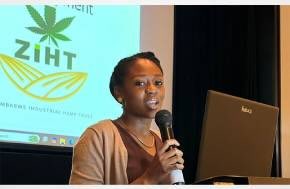
Speaking at the African Hemp Fibre Processing for Commercialisation Conference, Dr Zorodzai Maroveke, founder and CEO of the Zimbabwe Industrial Hemp Trust said that while African countries have legalised hemp, limited markets and incentives make turning policy into economic value a challenge.
The two-day event at the Southern Sun Elangeni & Maharani hotel brought together policymakers, researchers, financiers, and industry stakeholders to assess progress and identify barriers to scaling hemp production and processing across the region.
Speaking at the conference, Dr Zorodzai Maroveke, founder and CEO of the Zimbabwe Industrial Hemp Trust, said that while several African countries have made progress in legalising hemp, turning policy into economic value remains a major challenge.
She noted that despite successfully lobbying for four pieces of legislation in Zimbabwe between 2016 and 2023, the industry still faces significant constraints, particularly a lack of technical knowledge and market development.
“There is a very wide gap, from understanding the right varieties and agronomy to processing and, ultimately, who is going to buy the crop. Farmers will not grow something if they do not see value [in it],” she said.
Maroveke added that without clear market incentives, hemp could follow the same decline seen in crops such as cotton, where farmers have exited the industry due to poor returns.
According to her, a key requirement for unlocking Southern Africa’s industry’s potential is the development of locally relevant data and proof-of-concept projects.
“We cannot rely on data from other countries. Conditions differ across regions, and we must generate our own data to support decision-making,” she said.
She added that demonstrating viable business cases is essential to attract investment. “Until stakeholders, especially banks, see tangible results, they will remain hesitant to support the industry.”
Funding available, but conditions apply
From a financing perspective, Don Mashele, head of development impact support at the Small Enterprise Development and Finance Agency (SEDFA), said funding is accessible, but businesses must meet certain requirements.
“Once we understand the business case, it becomes easier for us to provide funding. From there, the business can scale and eventually attract larger funders,” he said.
Mashele explained that SEDFA focuses on early-stage support, helping businesses grow to a point where they can access commercial finance. “We are not meant to fund businesses indefinitely. Our role is to support them early, and once they scale, they move to bigger players.”
Read full article: