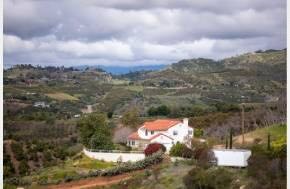
Header: A home overlooks the hills of Fallbrook, one of several unincorporated communities expected to see significant land-use changes under a proposed county cannabis program. Photo by Irina Danilova
FALLBROOK — San Diego County is moving forward with a sweeping cannabis program aimed at addressing decades of inequity from the War on Drugs, but the proposal is drawing pushback from rural communities that would bear the brunt of the potential impacts to land use and quality of life.
In a 3-2 vote on Jan. 14, the county Board of Supervisors advanced updates to its proposed Socially Equitable Cannabis Program, a framework that would allow a wide range of commercial cannabis activities — including cultivation, manufacturing, retail, distribution, testing, consumption lounges, temporary events and microbusinesses — in unincorporated areas.
Supervisors Jim Desmond and Joel Anderson, who represent unincorporated communities in East and North counties, voted against the program.
In 2021, the Board of Supervisors, led by former Chair Nathan Fletcher and Vice Chair Nora Vargas, directed county staff to develop the program, requesting a social equity component that would allow individuals with prior cannabis-related arrests and convictions, along with individuals in low-income and high-arrest communities, “greater opportunities to secure a county operating permit.”
“We know that many communities have been devastated by the War on Drugs and disproportionately impacted by the criminal justice system. We seek to undo these past wrongs by centering social justice at the core of our cannabis approach,” Fletcher said after the Board of Supervisors adopted a marijuana policy overhaul in January 2021.
According to the county, the Socially Equitable Cannabis Program aims to establish a regulated legal market for medical and adult recreational marijuana operations in unincorporated areas.
The program will expand access to the legal cannabis industry by providing grants, tax relief and licensing pathways for individuals impacted by “cannabis-related criminalization.” County planners say it also aims to align local rules with state law, promote safe access and economic opportunities and limit the negative effects of cannabis cultivation on the local environment.
Supporters say the effort is long overdue. Supervisor Monica Montgomery Steppe, who represents District 4 and the cities of La Mesa, Lemon Grove and portions of San Diego, along with unincorporated areas of Helix, Casa de Oro and Rancho San Diego, framed the program as both an economic opportunity and a moral imperative.
“For me, this really has always been about a moral obligation to repair harm,” Steppe previously said, referring to the disproportionate impacts of cannabis criminalization.
But in the 28 unincorporated communities where the program would take effect — spanning roughly 772,239 acres under county land-use control — residents and planning groups warn the trade-offs remain largely unexamined and could carry lasting consequences.
‘It’s about responsible land use’
At the heart of the debate is land use, according to leaders of several community planning groups in the county’s unincorporated areas.
“This isn’t about whether cannabis is legal — it’s about responsible land use,” said Jeniene Domercq, chair of the Fallbrook Planning Group’s cannabis ad hoc committee.
County planners presented five alternatives for the program, covering a range of potential regulations related to outdoor cannabis cultivation, license types and buffer distances from sensitive areas, such as schools and parks. From indoor-only operations and 1,000-foot buffers to limited outdoor grows (1 acre or less), the Board of Supervisors ultimately chose the least restrictive option.
The county’s approved plan, Alternative 2, allows all types of cannabis facilities, including outdoor farms, with a 600-foot buffer from schools, day cares and youth centers, while continuing to study lounges and events.
Rural planning groups had pushed for stricter limits, including indoor-only cultivation and larger setbacks.
“We ultimately recommended Alternative No. 4 — indoor cultivation only — to prevent many of the concerns around odor, crime and environmental impacts,” said Eileen Delaney, chair of the Fallbrook Planning Group. “(The Board of Supervisors) chose the option with the most impacts.”
Read the full report
Rural communities push back on county cannabis equity program