Download For Free At Podomatic
https://www.podomatic.com/podcasts/karmakoalapodcast/episodes/2026-06-11T03_50_49-07_00
I came across Kwasi’s paper i knew i had to speak to him about a hidden legal history and the changes in approaches to engendering change through the courts in common law countries
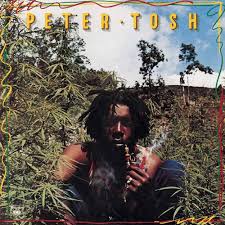
We also get to talk about Mr Tosh and the changes in language since the 1970’s and how legal language is struggling to keep up.
Anokye’s research draws heavily on African legal history, focusing on landmark decisions like Ghana’s historic Nyameneba v. The Republic case. In that case, the court recognized a distinct worldview where cannabis is revered as the “herbs of life”—not a criminal drug. [1, 2]
Anokye warns that when a government simply “legalizes” cannabis for commercial gain, it leaves spiritual users vulnerable. True freedom requires the state to fully step back and dismantle the colonial laws that banned the plant in the first place. [1, 2, 3, 4]
Key takeaways
- Legalization efforts for Rastafari sacramental use reinforce existing colonial and prohibitionist frameworks.
- International treaties like the 1961 Single Convention acknowledge traditional uses of cannabis but do not mandate prohibition.
- Recent Caribbean legalization measures, such as St. Kitts and Antigua’s bills, remain limited and politically charged.
- South Africa’s legal battles illustrate the failures of focusing solely on religious use exemptions.
- An abolitionist framework is necessary to dismantle the structures of cannabis prohibition effectively.
RASTAFARI ‘SACRAMENTAL USE’ & THE LIMITS OF LEGALIZATION
Abstract The concept of legalization – particularly with respect to Rastafari sacramental use – remains conceptually unstable and politically limiting. This paper interrogates the historical and legal trajectories of cannabis prohibition, especially within the framework of international treaties and regional legalization efforts in the Caribbean and South Africa. It explores the limitations of legalization for “sacramental use,” and critiques the proliferation of faulty terminology that sustains the prohibitionist paradigm.
Drawing on legal documents, activist commentary, and scholarly critiques, the paper argues that selective legalization has failed to dismantle the structures of prohibition and instead reinforces them under a new guise. Introduction: The Language of Legalization The early 21st century is often heralded as the “legalization era.” Yet within this discursive shift lies a troubling reproduction of prohibitionist logic. The notion of “legalization for sacramental use”- particularly in relation to the Rastafari community – is at best a partial remedy and at worst a reinforcement of colonial categorizations and market exclusions.
As Akyeampong (2005) and Waetjen & Ndandu (2024) demonstrate, the herb’s use historically extended across class, occupation and ritual spaces – from porters and sex workers to artists and lawyers – challenging the artificial separation of medicinal, recreational, and spiritual categories.
Colonial Foundations and the International Drug Control Regime To understand current legal frameworks, it is essential to revisit the foundational treaties. The 1925 Geneva Convention, though initiated by prohibitionist nations like white South Africa, British-occupied Egypt, and Italy, was actually a compromise.
Colonial powers such as Britain and France had lucrative stakes in the cannabis-derived pharmaceutical markets and thus sought flexible treaty language to protect their interests. The resulting legal ambiguity allowed signatory nations to implement the treaty according to national interests (Bewley-Taylor, 2012).
Crucially, though the International Narcotics Control Board (INCB) has emphasized prohibition, neither the 1961 Single Convention nor the 1988 Convention explicitly obligated states to prohibit marijuana. Both treaties contained caveats advising against interference with traditional uses of the herb, implicitly acknowledging practices such as Rastafari holistic use. Still, the language of “medicinal” and “scientific” uses – spawned by white policymakers unfamiliar with the herb – entrenched problematic taxonomies.
As a result, Rastafari’s holistic and integrated approach to the herb remains mischaracterized, often confined to narrowly defined “religious rights.” Legalization in the Caribbean: Partial Gains and Systemic Exclusions Several countries in the Caribbean have decriminalized cannabis possession and use: In Antigua & Barbuda, Jamaica, St. Vincent (2018), Barbados, St. Kitts, Trinidad & Tobago (2019)
Download the paper at
https://www.academia.edu/128798963/RASTAFARI_SACRAMENTAL_USE_THE_LIMITS_OF_LEGALIZATION

Kwasi Anokye