As highlighted by the fab Lex Pelger newsletter
For the past couple of years, many Global South nations have sought to capitalise on the global cannabis boom, reforming their drug laws just enough to allow for domestic cultivation industries to blossom, yet maintaining usually harsh systems of criminalisation.
In late 2025, Sri Lanka’s President Dissanayake opened the country up to medical cannabis investments, and the national investment board selected seven international unnamed firms to cultivate cannabis for medical oil production. Cultivation is set to be highly controlled, with police and Special Task Force monitoring and the explicit guarantee that cultivation is “permitted solely for export, with strict assurances that the crop will be used only for pharmaceutical production and testing.” Its purpose is solely to generate “significant foreign currency inflows”, whilst assuring “no part of the plant… may enter the domestic environment”. Government forces continue to consider cannabis as a highly dangerous drug, and legislation remains unaltered to reflect this.
Across the world we’ve seen a considerable amount of cannabis policy changes to harness the financial benefits of cannabis – with varying degrees of success.
In Lesotho, the first African nation to legalise medical cannabis in 2017, the plan was to export fully finished pharmaceutical products. The Government issued multiple licences to international firms to cultivate cannabis, with many local cannabis farmers being priced out of the legal market for not having enough funds to afford the expensive cultivation licences. Small scale growers were left out of the Government’s vision for cannabis’ future. Until today, Basotho cannabis has failed to bring serious riches to the state and its people.
Zimbabwe has gone through a similar dynamic: despite medical legalisation in 2018, traditional farmers remain priced out of the legal market, as high licensing fees mean that most investors have hailed from South Africa, Namibia, USA, Switzerland and the UK.
Malawi, which legalised medical cannabis in 2020 in the hopes of transitioning away from tobacco to cannabis as the new national cash crop, has also failed to reap any serious benefits. The industry remains tiny: of the four companies awarded cannabis licences, only one is currently operational.
These patterns of cannabis industry development are not just happening in Africa. In Jamaica, traditional cultivators complained of similarly prohibitively high fees and cultivation requirements, which seemed to be built more for foreign investment attraction than transitioning illegal cultivators into legal markets.
This extractive relationship seems to happen in most places that have optimal cannabis cultivating conditions and a need for foreign investment. As explicitly stated in Sri Lanka, the priority has often been to attract as much foreign capital while doubling down on existing prohibitions for local use and trade.
A global cash crop
Meanwhile, the global cannabis industry has generated billions for companies that have taken advantage of nations’ experimentations with cannabis regulation. It makes sense that countries with cheaper labour and ideal growing conditions would seek to cash in on this burgeoning industry; the issue is that this relationship can easily become an extractive one, with one party influencing the final terms of their exchange to ensure that they extract as much profit as possible.
This set up is not new: richer (particularly Western and former colonial) nations take advantage of their established companies, existing capital, manufacturing capacity and professional lobbying outfits to shape their relationship with poorer nations that have great primary resources and environmental conditions, yet lack technical know-how or resilient governance. From oil extraction in Timor-Leste by Australian companies, to tobacco cultivation in Malawi by British multinationals, this resource extractive relationship is a common feature of post-colonial economics and relations. Cannabis is merely the latest crop to feature in this age-old dynamic.
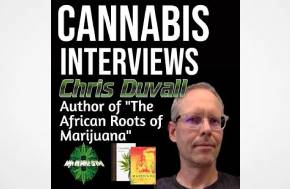
To better understand the extractive nature of these growing foreign-led cannabis industries, TalkingDrugs spoke in October 2025 with Chris Duvall, a Professor of Geography and Environmental Studies at The University of New Mexico and a biogeographer interested in the relationship between people and cannabis. His past research has looked at the colonial history of cannabis in Africa, exploring in detail the history of cannabis in Africa and its prohibition there shaped by punitive attitudes from African policymakers towards the plant and its effects.
This interview has been edited for brevity and clarity.
Andre Gomes: We’re seeing a growing number of Global South countries changing their laws to export cannabis for medical and industrial purposes, but little changes in domestic laws. What’s your take or analysis on this phenomenon?
Chris Duvall: An important concept in African studies is this idea of neocolonialism. And that goes back to the works of Kwame Nkrumah, who was the first president of Ghana. And the idea there is that you have external powers and it’s usually economic power rather than political power going into a country that’s bringing about change in policies or laws in that country that serves the interests of the external power, rather than the interest of the people. Oil companies in Nigeria are a great example of neocolonialism.
What we’re seeing in Africa at least is that kind of relationship being exercised by international companies. A lot of these are Canadian because Canada was early in its own legalisation. But increasingly, you know, we’re seeing them from other places, European countries, Israel – United States, not so much just because of the laws in the United States where it’s still federally controlled. But you know, you’re seeing situations where licenses that allow companies to grow in Zambia or whatnot are priced at a point where the international countries can easily purchase them, but essentially impossible for most locals to actually purchase and participate in.
And it’s important also to recognise that the laws really haven’t changed. It’s the policies that have changed in most cases where drug control laws historically in nearly all countries, at least for cannabis; and in Africa, these are mostly colonial legacy laws. There was always a point in those laws where licensed production was allowed and this was intended to serve pharmaceutical markets. What countries have done in the last 10-15 years is change their policies where they actually will sell licenses, whereas in the past there was never any license being sold. And so, you know, again, that’s the external money going in and saying, “we want to do something different” and the governments of those countries saying “yes, we’ll do something different without changing the laws”. So there’s still harsh drug control laws against the people in these countries. In most places, cannabis has been grown and used for centuries, so there’s these deeply rooted traditional uses that are still prohibited.
AG: Do you think that the value that the burgeoning legal cannabis industries are bringing into the country trickles down to the rest of the population, to those that have been previously involved in the illegal cannabis industry?
Read More
Cash Crop: The Extractive Cannabis Industries Of the Global South