
When police were called by NZ Post staff about a package that had raised eyebrows, they agreed that it “reeked” of cannabis.
When they opened the parcel, which had been posted in a drop box at Westend Dairy in Rotorua, police found three clear dropper bottles containing a “dark green liquid”.
The bottles had been sent by Jennifer Devery, who has been sentenced for supplying cannabis oil, after a police investigation.
But after her sentencing in the Rotorua District Court last week, Devery told NZME her offending was “not about the profit”.
She said she began supplying cannabis oil after her sister-in-law died, following a cancer diagnosis.
Devery said her sister-in-law’s illness and the grief surrounding it had been at the “forefront” of her mind.
“You know, a lot of people out there dying. The people that I sold to had cancer, had arthritis, unwell kids, [they were] people that couldn’t afford legit medication.”
As a recovering drug user, she said it was never “about putting drugs into the community” and said she has a lot of remorse about her actions.
“I could have done things a whole lot different, could have dealt with my grief a whole lot different, could have supported people a whole lot different,” she said.
Cannabis sales through Facebook
Devery ran an online business through Facebook, advertising cannabis oil for sale in various quantities and prices through the profile page “CBD New Zealand”.
As part of her business, she would also sell legal natural health balms, and balms and oils containing cannabis oil.
Between October 18, 2023, and October 17, 2024, Devery supplied cannabis oil and natural health balms to approximately 521 customers around New Zealand, receiving $32,445.50 in cash deposits.
The sales varied in price and quantities, with prices ranging from $25 to $260, and quantities between 20ml and 100ml.
Customers would reference “CBD”, “CBD oil”, “oil”, “bud” or “balm” when paying into Devery’s bank account.
Between October 18, 2024, and December 4, 2024, Devery supplied cannabis oil and natural health balms to approximately 57 customers around New Zealand, receiving $4,495.50.
Again, the customers would use references that included “Cbdnz, 100ml, 20ml oil, and oil” when paying into her bank account.
An agreed summary of facts also said, however, that it was not possible to specify how many transactions involved the supply of illegal cannabis oil, as opposed to the legal natural health balms.
But it was accepted that the supply of illegal cannabis oil, including within balms and oils, constituted more than half of her business’ operation.
Her lawyer, Scott Mills, clarified with the sentencing judge that this was “somewhat misleading”, as the reference to “half” also included products that contained cannabis oil, such as balms.
This aspect of the offending resulted in a representative charge for supplying cannabis oil.
There was also a separate charge for the discrete incident in October 2024, which resulted in her offending being discovered by police.
On October 6, 2024, Devery was chatting with a potential customer on Facebook through her CBD New Zealand page.
The customer saw an advertisement on the Facebook page, selling three bottles of cannabis oil for $50 on special.
Devery received a message from a customer in Napier, asking whether Devery still had the special for three oils, specifically requesting that they have “THC”.
Devery gave her the account number and requested a screenshot confirming the payment was made.
The customer then provided her address, and Devery thanked her and said she would provide tracking details.
The next day, Devery delivered the parcel of three THC cannabis oil bottles to the NZ Post drop box at Westend Dairy in Rotorua, to be sent to Napier.
When NZ Post staff in Napier received the parcel on October 9, they noticed its suspicious smell and called the police.
Police picked up the parcel and in describing it, said it “reeked” of cannabis.
On October 10, police searched Devery’s home and found NZ Post packaging sent to Devery, which contained large quantities of empty capsules, similar to those containing the cannabis oil.
Cash to the tune of $3635, made up predominantly of $50 notes, was found in a Nike bag in a room where cannabis capsules were found, in a dresser drawer and under the mattress in Devery’s bedroom.
Judge hopeful Devery can live ‘offence-free’
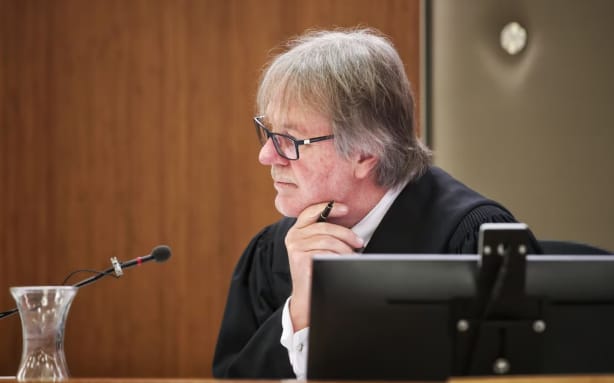
When it came to sentencing, Judge John Bergseng took into account the “extensive” work Devery had done to rehabilitate, with reports noting “a genuine motivation” on her part.
“You’ve taken every opportunity, you’ve made the most of it, you’ve taken up the study opportunities, and you’re working towards a mental health and addiction qualification,” the judge said.
Open Justice
The judge also noted there was a causal connection between her troubled background – and PTSD – and her offending.
Her addiction issues had been extensive and present over a large number of years.
“But you have shown that for a period of eight years you were able to live, offence-free, and the work you’ve done, in addressing, those background factors indicates that you can live offence-free in the future,” Judge Bergseng said.
She was given a 15 percent discount for addiction issues, 15 percent for remorse and 25 percent for her guilty plea.
This led to a sentence of 20 months’ imprisonment, reduced to 14 months because of time spent on restricted bail conditions.
This was then commuted to a home detention sentence of seven months.
Devery told NZME the biggest victims in “all of this” were her family members, and now she was focused on being home with them.
“They’ve been without me for 14 months, 15 months if you count jail,” she said, noting the “29 days” she’d spent in custody initially.
While Devery was upfront about the fact that she’s spent time in custody before, she said her most recent experience had been a “shock”.
“[It was] full of mental health, full of my maemae, full of trauma, full of hurt, you know, a lot of unwellness in there,” she said.