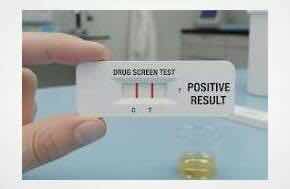
Marijuana-impaired driving cases are more complex than they first appear. Unlike alcohol, THC has no simple impairment cutoff like a .08 BAC. A driver may test positive after a crash, yet that result alone doesn’t prove impairment at the time of the collision.
THC can stay detectable long after its effects have faded. Timing of use, when the test was taken, the type of THC found, and the driver’s actual behavior all shape how the result should be read. A full analysis needs more than just confirming THC was present.
This distinction is especially important in marijuana related car accidents in Michigan, where toxicology results may be only one piece of evidence used to determine whether marijuana impairment contributed to a serious car accident.
THC Presence Doesn’t Necessarily Prove Impairment
A toxicology test can show that THC or a THC metabolite was in someone’s system. It does not automatically prove what effect marijuana had on that person at the exact moment of the crash.
This remains one of the core challenges in marijuana-impaired driving cases. As NHTSA notes, a positive drug test only establishes that the substance was present—it does not necessarily mean the driver was impaired when tested.
Several factors shape how a result should be read:
- How recently the person used marijuana
- Whether it was smoked, vaped, or taken another way
- How often the person uses cannabis
- Whether the test found active THC or a metabolite
- Time between use, the crash, and the test
- Presence of alcohol or other drugs
- Any independent signs of impaired driving
So the real question isn’t just “Was THC detected?” It’s whether the full evidence shows that THC actually affected the driver’s ability to operate the vehicle safely at the relevant time.
THC Does Not Have a Simple .08 BAC Equivalent
Alcohol impairment is commonly discussed in terms of BAC, with .08 widely recognized as the legal threshold for adult drivers in the United States. This can create the mistaken impression that marijuana has an equivalent THC threshold.
However, there is no universally accepted THC concentration that functions like a .08 BAC threshold for impairment. NHTSA has reported that no chemical test for marijuana impairment is equivalent to an alcohol BAC test.
This distinction matters because THC levels can change rapidly after consumption. A blood sample collected later may show a substantially different concentration than existed shortly after use. Therefore, a numerical THC result should not automatically be treated as a direct measurement of driving impairment.
Timing Can Change the Meaning of a THC Result
When marijuana was consumed and when a toxicology sample was collected can significantly affect what a positive THC result means.
THC Levels Can Change Quickly
The timing of marijuana use and toxicology testing matters a lot. After someone smokes cannabis, THC hits the bloodstream fast—but levels can drop sharply within an hour or two. NHTSA notes that concentrations may look high right after smoking yet be much lower later. That creates real problems in crash investigations.
A blood test taken several hours afterward might still find THC, yet it won’t prove the driver was impaired at the moment of the collision. The same number can mean different things depending on:
- Recent versus earlier use
- Occasional versus frequent use
- Individual metabolism
- How the cannabis was consumed
- The product’s type and potency
- How much was taken
So the result has to be read against the timeline, not treated as a standalone fact.
Active THC and Metabolites Differ
Another important distinction involves what exactly a toxicology test detects.
Tests may identify active THC or substances produced when the body metabolizes THC. These compounds do not necessarily have the same relationship to current impairment.
A metabolite can remain detectable after the effects associated with marijuana consumption have subsided. NHTSA notes that marijuana metabolites can be detected for days or even weeks after consumption, long after potential impairing effects have ended.
That means a positive result can establish prior exposure without necessarily establishing that marijuana was affecting the person’s driving at the time of an accident.
The type of test and substance detected therefore matters.
Driving Behavior May Provide Important Evidence
Because a THC test alone may not prove impairment, a driver’s actions before and during the crash can help show whether marijuana affected their ability to drive safely.
What Happened Before the Crash?
Because a THC test does not independently provide a reliable impairment measurement, investigators may need to examine what the driver was actually doing behind the wheel.
Driving behavior can provide context for the toxicology result. Depending on the circumstances, relevant evidence might include:
- Swerving or unexplained lane departures
- Running a red light or stop sign
- Unusually slow or inconsistent driving
- Delayed reactions
- Difficulty following traffic controls
- Failure to respond appropriately to changing road conditions
- Statements made by the driver
- Observations made by police officers or witnesses
- Dashcam, surveillance, or cellphone video
- The driver’s performance during a traffic stop
None of these alone proves impairment, but together they help build a fuller picture. For instance, a positive THC test with clear signs of impaired driving carries more weight than a positive test from a driver behaving normally in a crash caused by something else.
The Cause of the Accident Still Matters
A positive THC test can attract significant attention after a serious collision, but the presence of marijuana does not automatically establish that marijuana caused the crash.
Traffic accidents can have many causes, including:
- Distracted driving
- Speeding
- Poor road conditions
- Mechanical failure
- Fatigued driving
- Weather
- Unsafe lane changes
- Failure to yield
- Alcohol impairment
- Other drugs or medications
- Another driver’s conduct
A careful accident investigation should therefore distinguish between presence, impairment, and causation.
These are related concepts, but they are not identical.
A driver can test positive for THC without necessarily being impaired. A driver can also be impaired without a toxicology result providing a straightforward measurement of the degree of impairment. Determining whether marijuana contributed to a collision requires consideration of the complete set of available evidence.
Other Substances Can Complicate the Analysis
A positive THC result doesn’t tell the full story when alcohol, prescription medications, or other drugs are also present.
NHTSA notes that combining substances can increase impairment. Investigators must consider whether THC alone affected the driver or whether other substances contributed.
When multiple substances are detected, analysts evaluate their individual and combined effects. A positive THC result shouldn’t automatically be considered the sole cause of a crash.
Michigan Law Makes the Legal Context Important
Michigan law prohibits driving under the influence of marijuana, but a positive THC test does not automatically establish impairment. The legal analysis may depend on the type of test, evidence of impairment, the driver’s circumstances, and other factors.
For that reason, a positive THC result should be considered alongside the applicable Michigan law and the evidence supporting an impairment claim.
What Evidence May Be Important After a Serious Crash?
When marijuana use is part of a serious crash investigation, several types of evidence may help determine what happened.
Toxicology Evidence
A toxicology report can show which substances were detected and, depending on the test, their concentrations.
Key questions include:
- Was active THC or a metabolite detected?
- What type of sample was tested?
- When was it collected?
- How soon after the crash was testing performed?
- Were other substances detected?
Timeline Evidence
The timing of events can be critical. Investigators may need to establish when marijuana was used, when the driver began driving, when the crash occurred, and when the sample was collected.
Without this timeline, a THC result can be difficult to interpret.
Witness and Officer Observations
Witnesses, passengers, officers, or medical personnel may have observed the driver’s speech, coordination, behavior, or condition. These observations should be considered alongside other evidence, not treated as automatic proof of impairment.
Accident Reconstruction
Accident reconstruction can help determine how the crash occurred. Vehicle speeds, braking, points of impact, road position, traffic signals, and visibility may help identify whether impairment contributed or another factor better explains the collision.
Why the Entire Evidence Picture Matters
A positive THC test matters—marijuana impairs reaction time, coordination, judgment, and lane tracking, and driving under its influence is illegal.
But a positive test alone isn’t proof of impairment. Unlike blood alcohol content, THC levels don’t reliably predict driving ability, and NHTSA-reviewed research finds little dose-response evidence.
This gap is critical when fault or causation is questioned in serious crashes.
Conclusion
A positive THC test can carry weight, but it alone doesn’t prove impairment at the moment of the crash. Unlike alcohol, there’s no simple THC threshold that reliably confirms impairment.
Understanding whether marijuana played a part means examining the timing of use and testing, the type of THC detected, the driver’s actions, witness observations, accident evidence, and any other substances that showed up.
Ultimately, a positive test and actual impairment are not the same thing. The result needs to be evaluated within the broader context of the collision.