
A Pioneer Remembered: Peter Homberg and the Future of Medicinal Cannabis in Germany
Author
Judith Heimbürger, Partner, gunnercooke* GmbH*

Honouring a man who helped shape Germany’s legal medicinal cannabis industry – and why his approach to regulation matters more than ever
From the early days of medicinal cannabis legalisation, there was someone willing to stand in a business meeting and say the word “cannabis” without flinching. For the German legal cannabis industry, that person was Peter Homberg.
Remembering Peter Homberg
Peter Homberg, partner at international law firm gunnercooke and one of Germany’s most recognised legal experts in cannabis regulation, passed away unexpectedly almost nine months ago. His loss sent ripples through an industry he had helped shape from its earliest days – and through the lives of colleagues, clients and friends who had come to rely on his counsel, his warmth and his unfailing sense of humour. His absence is still palpable.
Some affectionately called him “Mr. Cannabis”; others the “Richard Gere” of the legal life sciences industry. He carried both titles with the same mix of charm, confidence and humility that filled every room he entered. To those who knew him well, however, he was something simpler and rarer: someone who genuinely believed in people, pushed them further than they thought possible and remained fiercely loyal to them.
To understand his contribution to medicinal cannabis in Germany and beyond, it is worth remembering where the industry started. When Germany legalised medicinal cannabis in 2017, saying the word in a business meeting could still prompt raised eyebrows, awkward smiles or outright dismissal.
Peter chose that path anyway.
While others avoided an industry that was still fighting for legitimacy, Peter stepped directly into it. He appeared before parliaments in other European countries, spoke at conferences, gave interviews and tied his professional reputation to a sector few mainstream lawyers were prepared to embrace at the time.
He became one of the defining legal voices of Germany’s medicinal cannabis transformation – and his reputation extended far beyond Germany.
His achievements will not fade. They live on in legal opinions, articles, interviews, companies and careers he helped shape – and potentially in legislation still to come.
Those who knew him well also remember his extraordinary instinct for political developments. During a keynote at the end of April 2025, he paused mid-presentation and asked the audience whether they knew the name Nina Warken, who had just been announced as Germany’s incoming Minister of Health at that time.
“Remember that name,” he said. “There is something to come.”
He was right.
His last professional passion project: the proposed amendments to the MedCanG
Since April 2024, medicinal cannabis has no longer been classified as a narcotic in Germany. It is a prescription-only medicinal product regulated primarily under the Medicinal Cannabis Act (Medizinal-Cannabisgesetz, “MedCanG”).
The reform Peter became particularly passionate about concerns the amendments proposed under Federal Minister of Health Nina Warken. The Ministry pointed to a sharp increase in medicinal cannabis imports that had not been matched by a comparable rise in prescriptions reimbursed by statutory health insurance. It identified parts of the telemedicine market as a potential source of misuse.
Although Warken has since left the Ministry of Health, the legislative proposal she initiated remains unresolved.
The concern centered particularly on online platforms through which prescriptions could be obtained with very limited physician-patient interaction – in some cases predominantly on the basis of online questionnaires – followed by postal delivery of cannabis by a pharmacy.
The Government’s draft therefore focuses principally on cannabis flowers. It would require a direct personal consultation before the initial prescription and regular personal consultations for repeat prescriptions. It would also significantly restrict the postal distribution of medicinal cannabis flowers.
The draft has, however, proved controversial. At the public hearing before the Bundestag’s Health Committee in January 2026, experts broadly recognized the need to address misuse but disagreed substantially over whether the Government’s chosen measures were proportionate and appropriately targeted. In particular, industry and patient representatives warned against restricting legitimate patient access.
The second EKOCAN interim report, published on 1 April 2026, added another dimension to that discussion. Its assessment of medicinal cannabis focused not only on access but also on issues such as high-THC products, advertising and the distinction between medicinal and non-medical markets.
The underlying question therefore remains the same: how can Germany address genuine misuse without making access unnecessarily difficult for legitimate patients?
Peter’s preferred alternative: regulation, not restriction
That question was at the heart of Peter’s position.
He did not argue for an unregulated market. Quite the opposite. He believed that platforms and other market participants should be subject to effective supervision – but that regulation should address the source of the problem rather than restrict an entire distribution channel.
His proposal centered on bringing telemedical platform operators within the existing MedCanG authorization framework and requiring them to obtain an authorization from the Federal Institute for Drugs and Medical Devices (Bundesinstitut für Arzneimittel und Medizinprodukte, “BfArM”).
The logic was straightforward: an authorization regime could provide authorities with a direct means of supervising platform operators, their advertising practices and their cooperation models with physicians and pharmacies.
Video consultations could become the normal standard for telemedical cannabis treatment. Questionnaire-only prescription models could be effectively addressed. At the same time, legitimate telemedicine and the supply of patients by specialized pharmacies would not have to disappear.
It was a typically Peter solution: regulate the actor that creates regulatory concern, rather than restricting lawful access for everyone.
A new front: reimbursement restrictions
However, in the last weeks and months the debate has expanded beyond telemedicine and MedCanG.
At the end of July 2026, Germany introduced far-reaching new restrictions on the reimbursement of medicinal cannabis by statutory health insurance under Section 31(6) SGB V.
Cannabis flowers are now excluded entirely from statutory reimbursement. For standardized cannabis extracts and medicines containing dronabinol or nabilone, a further hurdle was introduced: patients beginning cannabis therapy for the first time must, in principle, first undergo a six-month trial with an approved cannabis-containing finished medicinal product.
The practical consequences were immediate. In August, the Social Court of Frankfurt held in preliminary proceedings that even a patient who had been treated with cannabis flowers for approximately three years and held an indefinite prior approval from her health insurer could not rely on grandfathering protection. The decision is not yet final.
But the six-month rule has created an even more fundamental problem.
The legislation requires treatment with an “approved cannabis-containing finished medicinal product” but does not expressly say whether that product must also be approved for the patient’s particular indication.
Initially, the National Association of Statutory Health Insurance Physicians (Kassenärztliche Bundesvereinigung, “KBV”) and the National Association of Statutory Health Insurance Funds (“GKV-Spitzenverband)” took the same view: priority should apply only where a finished medicinal product was authorized for the relevant indication.
The KBV has since changed its legal assessment. It now considers the provision to require the use of a finished medicinal product even outside its authorized indication – in other words, an “off-label use” – before a patient may move on to other reimbursable cannabis medicines. The GKV-Spitzenverband continues to take a broader interpretation. The KBV has therefore expressly called on the Federal Ministry of Health to clarify the provision.
This is not a theoretical disagreement. The number of approved cannabis-containing finished medicinal products remains small and their authorised indications are narrow.
The issue has now also reached German Parliament. In an August 2026 parliamentary question, the Green parliamentary group asked the Government, among other things, which finished medicinal products were actually available for the mandatory trial and what cost savings the Government expects the new rule to produce.
The voice that is missing
It is at moments like this that Peter’s voice is particularly missed.
Not because he opposed regulation. He did not. Nor would he have dismissed legitimate concerns about patient safety.
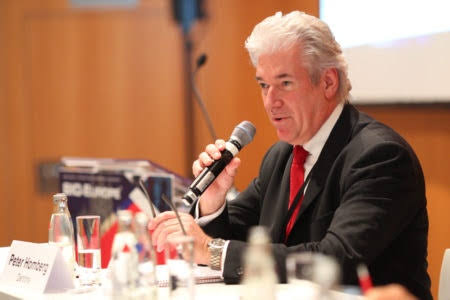
What distinguished him was his insistence on separating the legitimate regulatory objective from the legal and practical quality of the instrument chosen to achieve it. He would ask whether a restriction actually addressed the problem identified, whether it was proportionate, whether physicians and patients could understand what the law required – and whether anyone had sufficiently considered how the rule would work in practice before it became law.
Those are not pro-industry questions. They are the questions good regulation requires.
The current reimbursement dispute illustrates why that approach matters. A provision inserted shortly before a law was adopted has left two of the most important institutions in Germany’s statutory healthcare system with conflicting interpretations of whether patients may effectively be required to undergo off-label treatment.
Whatever view one takes on medicinal cannabis policy, that is not a satisfactory regulatory outcome.
And in an increasingly polarized cannabis debate, Peter’s particular ability to combine legal precision with pragmatism – to recognize a problem without automatically accepting the proposed restriction as its solution – is deeply missed.
A vision that lives on
Germany’s medicinal cannabis framework is now being reshaped on several fronts at once.
The proposed MedCanG amendments seek to restrict certain forms of telemedical prescribing and distribution. Whether, in which way and when will they come into force is another question.
The new reimbursement rules have already removed cannabis flowers from statutory health insurance and created a disputed priority for finished medicinal products. At the same time, courts, the medical profession, health insurers, patient groups and the industry are increasingly being asked to define where legitimate medical treatment ends and misuse begins.
The answer cannot simply be deregulation. But neither should every regulatory concern automatically lead to another prohibition.
Peter understood that distinction. Helping the medicinal cannabis industry make its voice heard is not easy without Peter, who was listened to and respected wherever he went.
Peter Homberg helped shape Germany’s legal medicinal cannabis industry when few were willing to take it seriously. Perhaps the most important way to honor that legacy now is to continue asking the question he asked so often: not whether regulation is needed, but whether we are regulating the right problem in the right way.
Judith Heimbürger, Partner, gunnercooke* GmbH*