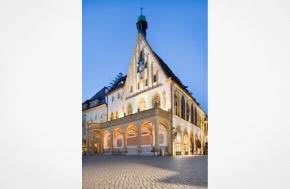
A ruling from Bavaria could permanently change the industrial hemp industry in Germany. The Amberg District Court acquitted one defendant of the charge of illegally trading industrial hemp with less than 0.3 percent THC, and the public prosecutor’s office withdrew the appeal.
The judgment is therefore final. The court’s reasoning: With the introduction of the Consumer Cannabis Act, the misuse of industrial hemp for intoxication purposes is simply no longer realistic, as adults can now legally purchase cannabis containing THC
What is the intoxication clause and why does it burden the industry?
The so-called noise clause is a German specific that does not exist in any other country in Europe. The Federal Court of Justice on March 21, 2021, decided that larger quantities of industrial hemp flowers with more than 0.1 percent THC could theoretically be processed to achieve a high. On this basis, the public prosecutor’s office prosecuted traders and producers who distributed perfectly legally grown industrial hemp for years.
The consequences for the industry have been significant. In 2025, the area under industrial hemp cultivation in Germany fell by 1,842 hectares, and 127 farmers withdrew from cultivation. Even museums and research institutions lost their cultivation permits because legal uncertainty became too great. The Pressure on German industrial hemp plants has been steadily increasing in recent years.
The Amberg Judgment: A new argument by the KCanG
The Amberg District Court suspended the previous understanding of the law. The crucial consideration: Anyone who wants to consume cannabis in Germany today can do so legally. This eliminates the theoretical danger that the Federal Court of Justice had cited as justification for the noise clause in 2021. In the court’s opinion, processing industrial hemp with less than 0.3 percent THC in order to get intoxicated is simply no longer a realistic option.
The decision is not just an acquittal for the specific defendant. Because the public prosecutor’s office waived an appeal, the verdict is final and sets a robust precedent. Other courts must address whether the intoxication clause is still constitutional after partial legalization.
Bundestag and legislators: The political side of the debate
Legislation also moves in parallel with case law. Bill 21/2116, which provides for the complete deletion of the intoxication clause from the KCanG, is before the Bundestag. In addition, a THC limit of one percent and permission for indoor cultivation of industrial hemp are planned. The draft was referred to the relevant committees in March 2026. It is still open when a vote will take place in plenary.
The industry has been calling for reform for years. Under former Agriculture Minister Özdemir the deletion of the intoxication clause was explicitly announced, but remained without any concrete legislative result. The debate on the optimal THC limit for industrial hemp has been dragging on for some time, including at European level. For the industry, both a higher limit and the abolition of the noise clause would be decisive relief.
What the judgment specifically means
In the short term, the Amberg ruling provides industrial hemp traders and producers with a legal argument that they can use in ongoing proceedings. It is not a carte blanche, because ultimately public prosecutors and courts continue to decide on a case-by-case basis. But the signal is clear: the noise clause is on shaky ground.
Read more at
Rauschklausel vor dem Aus: Bayerisches Gericht spricht Nutzhanf-Händler frei