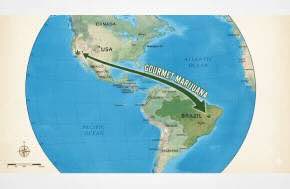
Seizures in Brazil of marijuana originating in the U.S. have already surpassed, in the first seven months of 2026, the total recorded for all of 2025, according to Federal Police data. The volume rose from 236.39 kg in 2024 to 664.74 kg in 2025, reaching 897.66 kg between January and July this year — a 35% increase from the previous year. Including Canada, which accounted for a larger share of seizures starting in 2025, the total reached 1.032 tons in the first seven months of 2026, compared with 1.016 tons for all of last year.
According to investigators, the rise of so-called ‘gourmet marijuana’ is linked to its high THC content and the ease of transporting it in smaller shipments, allowing it to command prices close to or higher than those of cocaine. While compressed marijuana from Paraguay contains between 2% and 8% THC, flowers from North America can reach 30%, while concentrated products exceed 50%. The difference is attributed to the development of the legal cannabis industry in the U.S. and Canada, whose cultivation techniques have been adopted by the illegal market.
The drug enters Brazil mainly through postal shipments and passengers used as couriers, with Guarulhos, Viracopos, Confins and Galeão among the main entry points. Paraguay also serves as a transit hub for shipments from other countries. In the domestic market, Brazilian production has also seen a jump in quality, with plants identified with THC levels of between 11% and 15%, possibly using foreign genetic material.