InDepth | Implications Of Himachal Pradesh Legalising The Controlled Cultivation Of Cannabis
What are the implications of the Himachal Pradesh government legalising the controlled cultivation of cannabis in light of the rising cases of drug abuse and trafficking of narcotics?
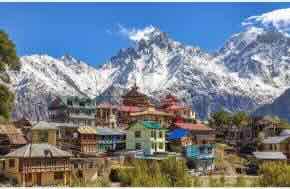
For decades, cannabis has been grown illegally and, in many areas, naturally as wild weed, in the deep valleys and remote mountain villages in Himachal Pradesh. More often associated with the state’s drug menace than its economic value, it has been the source of the illicit trade in charas (hashish) and marijuana in Kullu’s Parvati Valley and high-altitude Malana. Law enforcement agencies have long struggled to curb the cultivation and smuggling of the drug, which involve both local and foreign operators. Malana, which is said to be one of the world’s oldest democracies, gained international notoriety for its premium-grade charas, popularly known as “Malana cream”, which is in high demand within India and abroad.
In July, Himachal Pradesh became one of the few Indian states to permit the controlled cultivation of cannabis for medicinal, scientific and industrial purposes under a strict licensing regime. What were the Congress government’s intentions and how will the mechanism of legalised and regulated cultivation of cannabis play out in light of the rise in cases of drug abuse and trafficking of narcotics in the state?
“Narcotic Resource?”
The Himachal Pradesh government views cannabis as one of the state’s potential cash crops. When permitted under a controlled regime, it can boost the rural economy, generate employment and create new income opportunities for farmers in districts such as Kullu, Mandi, Chamba and Shimla. Further, the conducive climate of the hills makes the state an ideal place for cultivation, propagation and value addition by the pharmaceutical industry due to its medicinal value. This strategic shift seeks to transform a “narcotic” menace into a valuable economic and industrial “resource”.
The state government notified the Himachal Pradesh Narcotic Drugs and Psychotropic Substances (Amendment) Rules, 2026, (NDPS)—an enabling provision to issue licences for cultivation, processing, storage, transportation and manufacture of cannabis. Three prime objectives identified include the use of cannabis for medicinal products, scientific research and hemp-based products. Section 10 of the NDPS empowers the state government to make rules regulating the cultivation of cannabis (except for the production of charas), possession, transport, sale and purchase, licensing and permits; and medical and scientific use.
The cash-strapped Himachal Pradesh government is eyeing additional annual revenue of Rs 400 crore to Rs 600 crore, besides generating employment and investment.
Himachal Pradesh Chief Minister Sukhwinder Singh Sukhu says, “Our objective is to transform a wild weed into Himalayan gold by putting in place a legal framework for selective licensed cultivation in some areas suited to its cultivation. We are not permitting recreational cultivation and its sale for intoxication. It will be permitted solely for medicinal, scientific and industrial purposes. Himachal Pradesh’s policy is far more restrictive. Unlicensed possession and illegal extraction of charas, marijuana and hashish will invite arrests and jail.”
The Other States
The Bharatiya Janata Party (BJP)-ruled states of Uttarakhand and Madhya Pradesh have legalised cannabis cultivation. In fact, a high-level committee of Himachal Pradesh MLAs from the BJP and the Congress, headed by Revenue Minister Jagat Singh Negi, had visited the two states and held a series of meetings with government officials, stakeholders and scientists before recommending that the state government allow cannabis cultivation, hoping that it would also curb illegal trade. The Rajasthan government has allowed opium farming in certain areas, but only under strict government licences and control. But do other countries have similar legal provisions? As per state government officials, more than 50 countries, including Australia, Israel, Portugal, the UK and Thailand allow medical cannabis under licence. Canada has allowed fully legal recreational markets.