The report “Cocaine and conflict in Mali, Niger and Libya”, published on August 7 by the Global Initiative Against Transnational Organized Crime, a Geneva-based organization specialized in the analysis of criminal economies
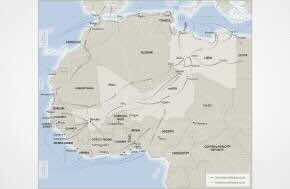
Most cocaine from Latin America bound for Europe continues to travel by sea, but land corridors through the Sahel represent a significant share of trafficking and outweigh the volumes handled in the region’s political and military economies. The proceeds finance armed groups, strengthen actors embedded within state apparatuses, and create incentives to maintain protection systems that allow shipments to cross borders and territories controlled by rival forces. The report identifies four major land corridors. Two converge in Libya: the first begins from West African landing points between Mauritania, Senegal, Guinea, Guinea-Bissau, Gambia, Liberia, and Sierra Leone, and passes through Mali and Niger; the second connects Togo, Benin, Ghana, and Nigeria, and to a lesser extent Burkina Faso, to Niger and then Libya. A third route runs up the Atlantic coast through Mauritania and Morocco towards Spain, while the fourth uses the Nigerian ports of Lagos and Port Harcourt and the country’s road network to reach Niger.
After crossing the Salvador Pass, a remote Saharan border crossing near the triple border between Niger, Algeria, and Libya, shipments enter Fezzan, the vast desert region of southwestern Libya, reaching first the Ubari oasis and then Sebha, the main urban and logistics center in the south of the country. From there, the route ascends toward Zintan, in the Nafusa Mountains, to reach Tripoli and Sabratha, on the Mediterranean coast of Tripolitania. A second route enters Libya through Al Qatrun, in southern Fezzan and near the borders with Niger and Chad, before heading toward Sebha or, further east, toward the Tazirbu oasis in southeastern Libya. From there, cargoes can continue overland to Egypt or up to Tobruk and Benghazi, on the coast of Cyrenaica, for shipment by sea. According to traffickers and transporters interviewed by Gi-Toc, between 60 and 70 kilograms of cocaine transit through the Salvador Pass every month.
Read the full article