Lex Pelger found this first
Highlights
- •
Introduces a novel four categories photoperiod-based classification for hemp varieties based on flowering responses.
- •
Agronomic traits varietal groups align specific environmental conditions and production to improve breeding and management.
- •
Enhances understanding of flowering behaviour and identify future research priorities in photoperiod responsiveness.
Abstract
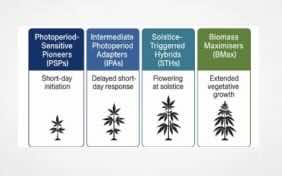
Hemp (Cannabis sativa L.) is an increasingly important multipurpose crop, valued for its industrial, nutritional, and medicinal uses. Flowering behaviour in hemp, largely governed by photoperiod sensitivity, is a key determinant of crop adaptation, productivity, and end-use quality. In this study, we propose a novel photoperiod-based classification system for hemp varieties, informed by synthesis and comparative analysis of phenotypic data, multi-environment trial observations, and published literature. Varieties are grouped into four functional categories: Photoperiod-Sensitive Pioneers (PSPs), Intermediate Photoperiod Adapters (IPAs), Solstice-Triggered Hybrids (STHs), and Biomass Maximisers (BMax). This framework offers a practical tool for aligning genotype selection with specific environmental conditions and production objectives. It supports the development of targeted breeding programs, optimised crop management, and precision phenological strategies, particularly under diverse photothermal regimes. We outline the agronomic implications associated with each varietal group and highlight areas for further research into the genetic and physiological mechanisms underpinning photoperiod responsiveness. This classification promotes a more systematic understanding of hemp phenology and strengthens its potential contribution to sustainable and climate-resilient agriculture.
Graphical Abstract

More at https://www.sciencedirect.com/science/article/pii/S092666902500977X