The imprisonment of former Paraguayan senator Erico Galeano has become one of the most significant political and criminal justice developments in Paraguay in recent years. Once considered a prominent figure within the country’s ruling Colorado Party and an influential businessman, Galeano now faces a 13-year prison sentence after being convicted of money laundering and criminal association linked to an international cocaine trafficking network led by notorious Uruguayan drug kingpin Sebastián Marset.
The case highlights the growing challenge organized crime poses to Paraguay’s political institutions and demonstrates the authorities’ determination to dismantle criminal networks that have allegedly penetrated the highest levels of government and business. Galeano’s conviction is also closely connected to Operation A Ultranza PY, the largest anti-drug operation ever conducted in Paraguay, which exposed a vast network of traffickers, financiers, and collaborators operating across South America.
For years, Erico Galeano was a well-known political figure in Paraguay. He served as a member of the lower house of Congress from 2018 to 2023 before moving to the Senate, where he remained until May 2026. His political influence, combined with his business interests, made him one of the more recognizable figures within the ruling Colorado Party.
However, prosecutors gradually assembled evidence suggesting that Galeano had used his resources and connections to assist major drug trafficking organizations. Following an extensive investigation, Paraguayan courts concluded that the former lawmaker had actively participated in activities that supported criminal enterprises involved in the international cocaine trade.
The case took a decisive turn when legislators voted to strip Galeano of his parliamentary immunity, clearing the way for his detention and imprisonment. Parliamentary immunity often protects elected officials from prosecution while in office, but lawmakers determined that the evidence presented by investigators warranted legal action.
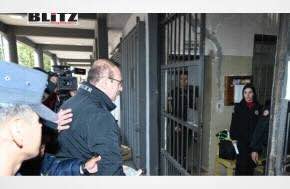
Within days of losing that protection, Galeano was taken into custody and transferred under police escort to Paraguay’s principal prison facility in the capital, where he began serving his sentence.
Central to the prosecution’s case was Galeano’s alleged relationship with Sebastián Marset, one of the most wanted drug traffickers in South America.
Marset has long been accused by authorities across the region of orchestrating extensive cocaine smuggling operations that moved narcotics through Paraguay, Bolivia, Uruguay, and other countries before reaching international markets. He is wanted by both Paraguayan and US authorities and has become one of the most recognizable figures in the continent’s fight against organized crime.
According to prosecutors, Galeano provided logistical assistance to Marset by allowing the trafficker to use his private aircraft. Investigators argued that access to such transportation played a significant role in facilitating criminal activities and maintaining communication among members of the trafficking organization.
The court found this evidence persuasive, concluding that Galeano’s involvement went beyond incidental contact and constituted active participation in supporting a criminal enterprise.
Another major element of the case involved a controversial real estate transaction valued at approximately $1 million.
Prosecutors alleged that Galeano sold property for cash to an individual acting on behalf of Miguel “Tío Rico” Insfrán, a Paraguayan trafficking figure believed to have worked closely with Marset. Authorities argued that the transaction formed part of a broader money laundering scheme designed to conceal the origins of profits generated through cocaine trafficking.
Money laundering remains one of the most important mechanisms used by organized crime groups. Criminal organizations rely on financial transactions, property purchases, and business investments to legitimize illegally obtained funds and integrate them into the formal economy.
The court concluded that Galeano knowingly participated in activities that helped disguise criminal proceeds, resulting in his conviction on money laundering charges in addition to criminal association.
The investigation into Galeano emerged from the wider framework of Operation A Ultranza PY, an unprecedented anti-narcotics initiative launched in February 2022.
Widely regarded as Paraguay’s largest anti-drug operation, the campaign involved cooperation among national law enforcement agencies, prosecutors, financial investigators, and international partners. The operation targeted an extensive network accused of moving large quantities of cocaine through Paraguay while simultaneously laundering enormous sums of money through legitimate businesses and real estate investments.
Authorities seized assets worth hundreds of millions of dollars, including luxury vehicles, aircraft, properties, livestock operations, and financial holdings. Investigators described the network as one of the most sophisticated criminal organizations ever uncovered in Paraguay.
The operation revealed how deeply organized crime had allegedly infiltrated economic and political structures. Numerous suspects were arrested, while many others became subjects of ongoing investigations. Galeano’s conviction represents one of the most prominent outcomes of the operation to date.
Including the former senator, six individuals have now been convicted in connection with the case, though dozens of investigations remain active.
The scandal has had profound consequences for Paraguay’s political landscape.
The involvement of high-ranking political figures has intensified public concerns about corruption, institutional vulnerability, and the influence of organized crime within government structures. The investigation has implicated several individuals with political connections, raising questions about whether criminal organizations successfully cultivated relationships with influential officials to protect their operations.
Among those drawn into the broader investigation is another Colorado Party politician, Juan Carlos Ozorio, whose alleged connections to trafficking activities continue to attract scrutiny from investigators.
The controversy has reinforced calls for stronger transparency measures, tighter oversight of political financing, and enhanced anti-corruption safeguards. Civil society organizations and political analysts argue that combating organized crime requires not only law enforcement action but also institutional reforms capable of preventing criminal infiltration of public institutions.
The wider crackdown has already produced dramatic and sometimes violent consequences.
In August 2024, former Colorado Party lawmaker Eulalio “Lalo” Gomes was killed during a confrontation with National Police officers who arrived at his residence to execute judicial orders related to alleged drug trafficking offenses.
The incident drew national attention and underscored the dangerous environment surrounding investigations into organized crime networks. While details of the confrontation remained the subject of public debate, the episode illustrated the increasingly aggressive efforts by authorities to pursue suspects connected to major trafficking organizations.
The Gomes case, combined with Galeano’s conviction, has highlighted the extent to which anti-drug investigations have reached influential political circles.
Despite his imprisonment, Galeano’s legal battle is not yet over.
His defense team has appealed the conviction to Paraguay’s Supreme Court of Justice, seeking to overturn or reduce the sentence. Lawyers argue that legal errors occurred during the proceedings and maintain that their client should not have been convicted based on the evidence presented.
Nevertheless, two appellate courts have already upheld the original judgment, strengthening the prosecution’s position and making a successful appeal more difficult.
For now, Galeano remains incarcerated while the country’s highest judicial authority considers the final stages of the case.
The imprisonment of Erico Galeano represents more than the conviction of a former politician. It symbolizes Paraguay’s broader struggle against transnational drug trafficking networks that have exploited the country’s strategic location in South America for decades.
Authorities view the case as evidence that even powerful political figures can be held accountable when linked to criminal enterprises. The conviction also sends a message that anti-corruption and anti-narcotics investigations will continue regardless of an individual’s political influence or social status.
As Operation A Ultranza PY continues to generate new prosecutions and investigations, the Galeano case is likely to remain a defining example of Paraguay’s efforts to confront organized crime and restore confidence in its institutions. Whether additional convictions follow may determine how successfully the country can dismantle the networks that have long operated in the shadows of politics, business, and international drug trafficking.