The Drug Enforcement Administration has released the full transcripts from its 11-day marijuana rescheduling hearing in Arlington, Virginia. Three states fighting to keep marijuana illegal called in the sheriff of the most well-known cannabis-growing county in the country as their star witness. What he actually said under oath backed some of the states’ fears and undercut others. Cannabis industry attorneys who watched the hearing are calling Honsal’s testimony a win for the rescheduling argument.
Why he was there
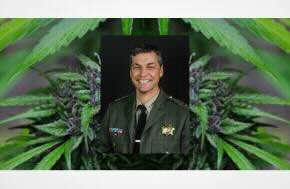
Nebraska, Idaho, and Indiana called Humboldt County Sheriff William Honsal as their final witness on July 15. The three states are fighting to keep marijuana classified as a Schedule I drug alongside heroin and are separately suing the Trump administration over an executive order on medical marijuana. None of the three states has a cannabis industry of its own. Humboldt County has roughly 1,000 licensed cannabis cultivators and produces about 1 million pounds of legal cannabis a year, according to the state Department of Cannabis Control’s harvest report.
Asked under oath why his office recently added another deputy to its Marijuana Enforcement Team, Honsal said, “Because the work is still there. The work, despite legalization, is still very active within our county. There is still illicit marijuana that is being grown in our county, and all of Northern California is affected by it.”
He described diversion, licensed growers secretly selling product on the black market, stating Humboldt weed can fetch up to $1,000 a pound out of state compared to $300 or $400 a pound through legal channels in-state. He also testified that some permit holders “have illegal grows on the side as well that aren’t inspected, that aren’t regulated,” in addition to their licensed operations.
Where it splits
Under oath Honsal confirmed that illegal cannabis cultivation remains a serious problem in Humboldt County. But other parts of his testimony complicated the states’ argument; he said legalization and regulation have helped law enforcement, and he acknowledged that his experience does not extend to any of the three states that called him.
When asked about Proposition 64, the 2016 law that legalized recreational marijuana statewide, Honsal did not describe it as a failure. “[F]rom my perspective, a lot of good came about within Prop 64,” he testified, crediting the county’s land use ordinance, paired with state regulation, with having “forced out a lot of the bad actors within the county.”
Asked directly whether legalization makes crime disappear, he said no. Then he added, “It clears things up for law enforcement. We know essentially the bad actors from the good ones.”
Under cross-examination, DEA attorney David Maley had Honsal agree that marijuana is legal in California, both medically and recreationally. Maley then asked Honsal to confirm that under federal legalization the problems he described existing in Humboldt County would not be a jurisdiction of any sheriff in Nebraska, Indiana or Idaho. Honsal agreed.
It was a simple jurisdiction question on paper. But everything Honsal had just described, decades of illegal grows, cartel activity, a black market that grew up around cannabis long before legalization, belongs to Humboldt’s specific history and geography. Nebraska, Idaho, and Indiana don’t have that history.
How the industry read it
MJBizDaily reported that Honsal’s testimony amounted to legal, regulated cannabis being “a positive for law enforcement,” and that most of the California cannabis showing up in other states traces back to unlicensed, unregulated growers, not the…….
Read more
Sheriff Called to Fight Federal Legalization Ends Up Making the Case for It, Industry Insiders Claim