Cannabis clones are shipping across state lines every day, and in most cases it is completely legal. That surprises a lot of people, including many who work in the industry. The explanation comes down to a single definition buried in the Agriculture Improvement Act of 2018, better known as the 2018 Farm Bill, and how federal agencies have interpreted it since.
The practical result is visible in the market. Licensed nurseries like ClonesUp now ship rooted cannabis clones to customers nationwide, with plants leaving the facility in a vegetative stage where delta-9 THC content sits far below the federal threshold. That business model exists because federal law classifies plant material by what it contains today, not what it might produce months from now. This article breaks down the legal mechanics behind it: what the Farm Bill actually says, where the DEA has landed, and where the real legal risk still sits at the state level.
An Industry Built on One Sentence
Before getting into the statute, it is worth noting how much commercial activity hangs on this single definition. Genetics companies, tissue culture labs, and mail-order nurseries have all built nationwide operations on the hemp carve-out.
They have also inherited its contradictions. Even though a compliant clone is federally legal hemp, Google Ads, Meta, and most major ad platforms prohibit or heavily restrict cannabis promotion, and they rarely distinguish between marijuana and compliant genetics. Paid acquisition is effectively closed, so organic search became the industry’s primary legal customer acquisition channel. Specialized agencies like 420 SEO exist for exactly this reason: they work exclusively with cannabis and hemp businesses because the normal digital marketing playbook is off the table and rankings have to do the work that ads do in every other industry. The law permits the product, the platforms restrict the promotion, and visibility gets decided in organic results.
With that context, here is the law itself.
What the 2018 Farm Bill Actually Changed
Before 2018, all cannabis was treated the same under the federal Controlled Substances Act. A rope-grade hemp stalk and a high-THC flower were both Schedule I marijuana in the eyes of the DEA.
The 2018 Farm Bill changed that by carving out a new legal category. Section 297A defines hemp as:
“the plant Cannabis sativa L. and any part of that plant, including the seeds thereof and all derivatives, extracts, cannabinoids, isomers, acids, salts, and salts of isomers, whether growing or not, with a delta-9 tetrahydrocannabinol concentration of not more than 0.3 percent on a dry weight basis.”
Two details in that definition do all the heavy lifting for clone shipping:
- “Any part of that plant, whether growing or not.” The definition explicitly covers living plant material, not just harvested crops or processed products.
- The test is delta-9 THC concentration at the time of measurement. Federal law classifies the plant material based on what it contains right now, not what it might produce later.
Hemp meeting this definition was removed from the Controlled Substances Act entirely. It is an agricultural commodity, and the Farm Bill also expressly prohibits states from blocking the interstate transportation of lawfully produced hemp through their territory.
Why Clones Qualify: The Immature Plant Argument
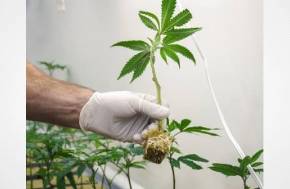
A clone is a cutting taken from a mother plant, rooted, and sold as a young vegetative plant. Here is the legally important part: a clone in the vegetative stage has not flowered. Cannabinoids concentrate in the flowers of the mature female plant. A non-flowering cutting contains only trace amounts of delta-9 THC, reliably below the 0.3 percent threshold when tested.
So under the plain text of the federal definition, a vegetative clone that tests under 0.3 percent delta-9 THC is hemp at the moment it is sold and shipped, regardless of genetics. The same cutting could grow into a plant producing 25 percent THC flower, but federal law does not classify plant material based on its future potential. It classifies it based on its current chemistry.
This is not a fringe reading. In a January 2022 letter responding to attorney Shane Pennington, the DEA confirmed that cannabis seeds, tissue culture, and other genetic material containing no more than 0.3 percent delta-9 THC meet the definition of hemp and are not controlled substances, regardless of the THC content of the plant they may eventually produce. Reporting on that letter is available from outlets like Marijuana Moment, and the reasoning has become known in the industry as the “source rule” shift: what matters is the delta-9 concentration of the material itself, not the plant it came from or the plant it becomes.
The Mail Question
Shipping legality and mailability are separate questions, and both matter. USPS addressed hemp mailability in 2019 guidance following the Farm Bill: hemp and hemp-based products may be mailed when the mailer complies with all applicable federal, state, and local laws and can demonstrate the material meets the federal definition. Private carriers set their own policies, which change more often, so most nurseries keep lab documentation on hand and follow carrier rules closely.
In practice, compliant shippers rely on three things: the plant is in a non-flowering vegetative state, testing or documentation supports the sub-0.3 percent delta-9 status, and records travel with the business, not necessarily with every box.
Where the Real Risk Lives: State Law
Federal law is only half the picture, and this is the part buyers and sellers get wrong most often.
The Farm Bill lets states regulate hemp production more strictly than the federal floor. Some states have done exactly that with cannabis genetics. A few examples of how state approaches diverge:
- Some states treat clones the same as any hemp plant material and allow them freely.
- Some require the recipient to hold a cultivation registration, a medical card, or a home grow allowance before possessing live plants.
- Some measure “total THC” (THCA plus delta-9) rather than delta-9 alone under state law, which changes the compliance math for certain material.
- A handful restrict live cannabis plant sales to licensed in-state channels entirely.
So a shipment can be federally lawful and still create state-level exposure for the recipient. Responsible nurseries publish state restrictions and refuse orders to prohibited jurisdictions. Buyers should check their own state’s home grow and hemp rules before ordering, because possession after delivery is governed by state law, not the Farm Bill.
Frequently Asked Questions
Are cannabis clones federally legal?
Yes, when they are in a non-flowering vegetative state and contain no more than 0.3 percent delta-9 THC on a dry weight basis. Material meeting that definition is hemp under the 2018 Farm Bill and is not a controlled substance.
Does it matter that the clone will eventually produce high-THC flower?
Not under federal law. The DEA’s 2022 guidance on seeds and genetic material confirmed classification is based on the delta-9 content of the material itself, not the plant it may grow into.
Can clones legally be sent through the mail?
USPS permits mailing hemp when the shipper complies with applicable law and can document that the material meets the federal definition. Private carriers have their own policies.
Is it legal for me to receive clones in my state?
That depends entirely on state law. Some states require a grow registration or medical authorization, and some prohibit live plant sales outside licensed channels. Check your state’s rules before ordering.
What happens once the plant flowers?
Once a plant produces flower above 0.3 percent delta-9 THC, it is no longer hemp under federal law. At that point legality depends on your state’s medical or adult-use cultivation rules.
Could this legal window close?
Possibly. Congress has continued extending the 2018 Farm Bill provisions while a new farm bill remains pending, and several proposals would change the THC standard or address intoxicating hemp products. Anyone building a business on the current definition should watch the reauthorization process closely.
The Bottom Line
Cannabis clones ship nationwide because federal law classifies plants by what they contain, not what they might become. A vegetative cutting under 0.3 percent delta-9 THC is hemp, full stop, and the DEA has said as much about genetic material. The unsettled edges are at the state level and in a future farm bill, so both nurseries and buyers should treat state rules as the real compliance checklist.